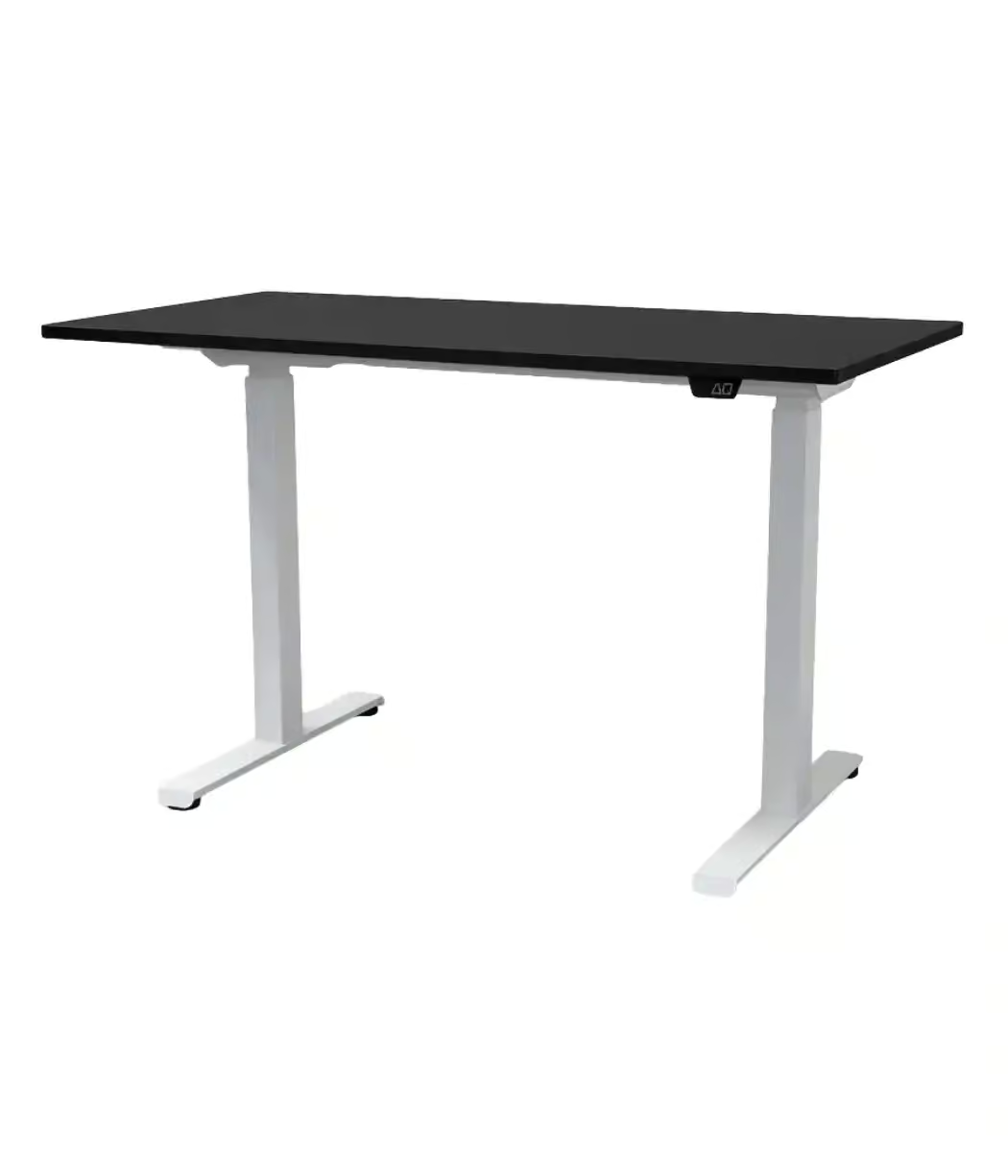
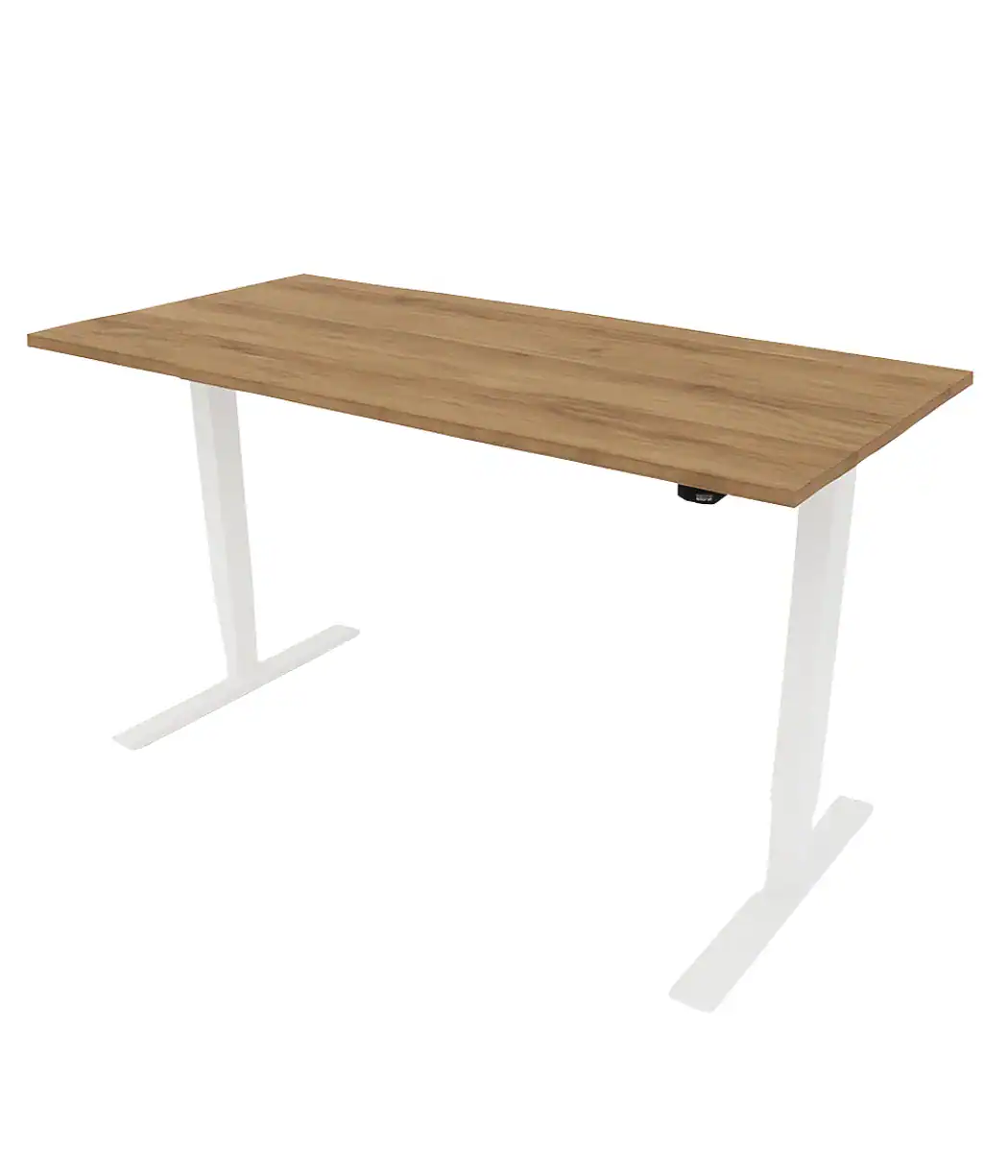
Height adjustable tables
Brando electrically adjustable desk
From
355,00 €

Height adjustable tables
Brando electrically adjustable desk
From
355,00 €
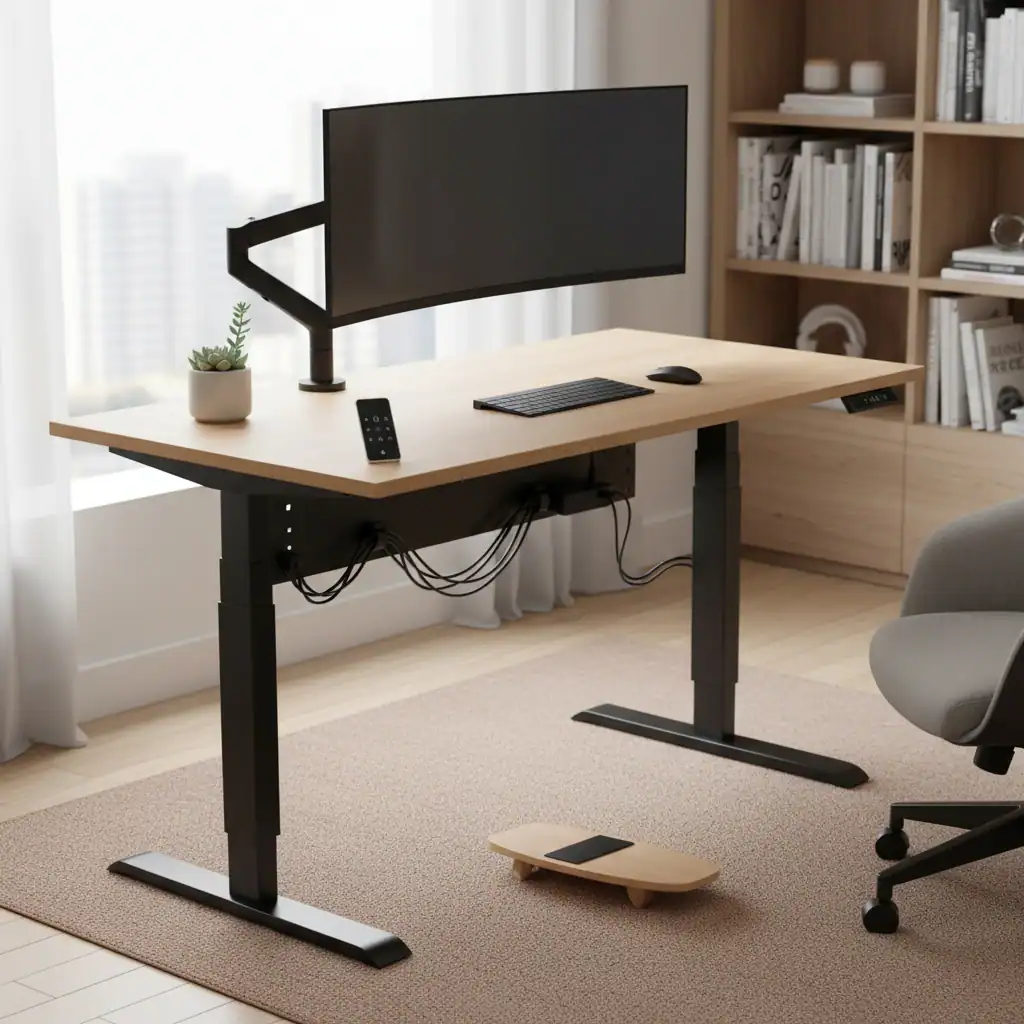
“Human beings are made to move, so it is not healthy to hold your body in one posture for a long time, whether standing or sitting. It is recommended to change body posture up to four times in an hour...” These are the conclusions of modern scientific research. But first, let's look a little at history.
Since ancient times, people have thought that sitting at a desk is not the only way to work. We have certainly seen in films of the 18th and even early 20th centuries that accountants and people involved in writing work standing up at their desks. Of course, it is fair to ask the question here: would a person be able to work productively throughout the day on the hard and totally unergonomic chairs of the time? And the answer is emphatically No! Of the two evils, man instinctively chose the lesser, spending his entire working day standing up.

With the advent of appropriate materials, tools and knowledge of human anatomy and physiological processes, we have created office chairs. Comfortable and convenient, the office chair has several ergonomic adjustment functions, allowing it to be adapted to the individual's body. Without a doubt, a good ergonomic office chair is the main and indispensable piece of furniture for people working in intellectual jobs! However, nowadays, based on real scientific studies, the negative effects of prolonged sedentary work on the human body are surpassed only by high blood pressure, smoking and high blood sugar levels. Unfortunately, most of society is not fully aware of the risks of prolonged sedentary work, both for themselves and for their children. There is a misconception that as long as you regulate your diet and do not become overweight, that is enough.

With the development of modern technology, more and more people spend their working day sitting in front of a computer screen, limiting their daily movements to a few walks to the coffee machine and one longer hike at lunchtime. Those who have to work at night often spend four or even six hours lying half asleep in soft and comfortable ergonomic office chairs. Prolonged sitting, even in a modern ergonomic chair, will eventually impair circulation, degrade several muscle groups, slow down metabolism and, in the long term, lead to serious and sometimes irreversible illnesses, physical and mental disorders. Nature's productivity declines and our quality of life deteriorates.
Human beings are made to move, so it is not healthy to hold your body in one posture for a long time, whether standing or sitting. It is recommended to change body posture up to four times in an hour. It is recommended that throughout the working day approximately 20-25% of time should be spent standing, regularly changing from a seated posture (approx. 15-20min) to a standing posture (10-15min). This is a statistical average which does not interfere with concentration, keeps the body alert throughout the day and prevents any physiological processes from being delayed.
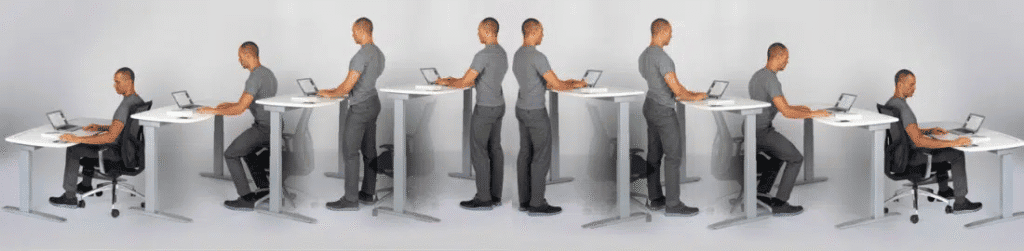
The most suitable solution for this type of work is an electrically height-adjustable table. Nowadays, they are no longer on the exclusive list and have become much more accessible and attractive in terms of price. The modern technologies and materials used in their manufacture have made them truly functional and attractive in terms of design to suit the tastes of even the most demanding users. As proof of the effectiveness and positive impact of such tables on human health, Scandinavian countries have introduced mandatory standards for the need and use of such tables in all public sector institutions and strictly recommended standards for private sector companies.
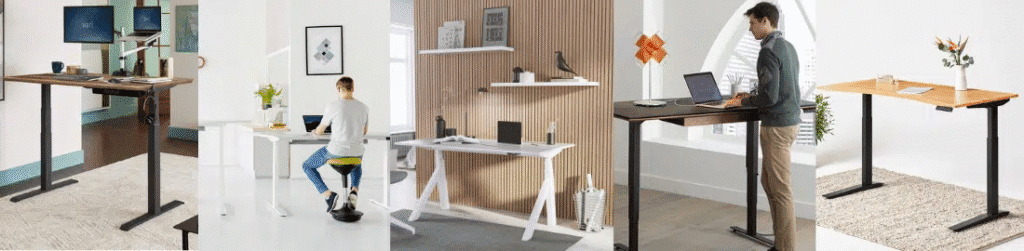
Height-adjustable desks in offices and other workplaces are no longer seen as a matter of fashion and design, or as a sign of status for wealthy companies. They are a way of taking care of public health, have a positive impact on people's mood and attitude to work, increase work efficiency and improve quality of life.